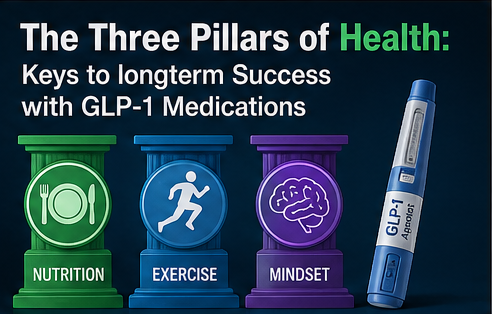
GLP-1 medications, like Ozempic or Wegovy, are popular tools for managing weight and conditions like diabetes. They work by mimicking a hormone that helps control blood sugar and appetite. But these meds aren’t magic meds. To get the best results and keep your health strong in the long run, you need to build a solid foundation. That’s where the three pillars of health come in: nutrition, exercise, and sleep. Think of them as the legs of a stool—if one is weak, the whole thing wobbles. In this article, we’ll explore each pillar and how focusing on them can make GLP-1 meds more effective while boosting your overall wellness.
Pillar 1: Nutrition – Fuel Your Body Right
Nutrition is all about what you eat and drink. It’s the first pillar because food is your body’s main energy source. With GLP-1 meds, good nutrition is crucial since these drugs slow down digestion and reduce hunger. If you don’t eat well, you might lose muscle instead of fat, or feel tired and weak.
To succeed with GLP-1 meds, aim for balanced meals that include proteins, healthy fats, veggies, and whole grains. Proteins like chicken, fish, eggs, or beans help maintain muscle mass, which can drop during weight loss. Veggies and fruits provide vitamins to keep your immune system strong. Avoid sugary drinks and processed snacks—they can spike blood sugar and undo the meds’ benefits.
How to accomplish this: Start small. Track your meals for a week using a simple app. Eat more home-cooked food, like a grilled salmon salad with quinoa. Drink plenty of water, at least eight glasses a day, to stay hydrated and help with digestion. Over time, this builds habits that support long-term health, reducing risks like heart disease.
Pillar 2: Exercise – Move to Improve
Exercise is the second pillar, focusing on physical activity to strengthen your body and mind. GLP-1 meds help you lose weight, but without movement, you might not build the strength needed for daily life. Regular exercise boosts your mood, improves heart health, and helps control blood sugar even better when combined with these meds.
The key is mixing cardio (like walking or biking) with strength training (like lifting weights or doing push-ups). Cardio burns calories, while strength work preserves muscle. Aim for at least 150 minutes of moderate activity per week, as recommended by health experts. This could be a 30-minute brisk walk five days a week.
To make it happen: Find activities you enjoy, like dancing or hiking, so it doesn’t feel like a chore. Start slow if you’re new—maybe 10 minutes a day—and build up. Pair it with GLP-1 meds by exercising after meals to enhance their effects on blood sugar. Long-term, this pillar prevents issues like weak bones and keeps you energetic as you age.
Pillar 3: Sleep – Rest to Reset
Sleep is the often-overlooked third pillar. It’s when your body repairs itself, balances hormones, and processes the day’s events. Poor sleep can make GLP-1 meds less effective because it messes with hunger signals and energy levels. Studies show that not getting enough rest can lead to more cravings and slower weight loss.
For success, target 7-9 hours of quality sleep each night. Create a routine: Go to bed and wake up at the same time, even on weekends. Keep your room cool, dark, and quiet. Avoid screens an hour before bed—they can disrupt your natural sleep cycle.
How to achieve it: Wind down with reading or light stretching. Limit caffeine after noon and heavy meals close to bedtime. With GLP-1 meds, good sleep helps manage side effects like nausea. In the big picture, solid rest lowers stress, sharpens focus, and supports mental health, making wellness sustainable.
Putting It All Together for Lasting Success
The three pillars—nutrition, exercise, and sleep—work best as a team. With GLP-1 medications, they amplify results: better weight control, stable energy, and fewer health risks. Start by picking one pillar to improve, then add the others. Track your progress in a journal, and consult a doctor for personalized advice.
Remember, health isn’t a quick fix; it’s a lifestyle. By mastering these pillars, you’ll not only succeed with GLP-1 meds but also enjoy a vibrant, long-term wellness journey. Small steps today lead to big wins tomorrow.
For extra reading, look at these studies that show combining GLP-1 drugs with strong habits in diet, physical activity, and rest leads to better weight loss, muscle preservation, metabolic improvements, and sustained results.
1. **Healthy weight loss maintenance with exercise, liraglutide, or both combined followed by one year without treatment: a post-treatment analysis of a randomised placebo-controlled trial** (published in *The Lancet*, 2021, with follow-up analysis in 2024).
This randomized controlled trial tested liraglutide (a GLP-1 agonist) alone, supervised exercise alone, or the combination for one year, then tracked participants for another year off treatment. The combination group kept more weight off long-term (less regain), had better body composition (more fat loss, less muscle loss), and more people maintained at least 10% weight loss compared to medication alone. Exercise helped preserve health benefits even after stopping the drug. This supports **exercise** (especially structured programs) as a key pillar for amplifying GLP-1 effects and long-term success.
2. **Nutritional Priorities to Support GLP-1 Therapy for Obesity: A Joint Advisory From the American College of Lifestyle Medicine, the American Society for Nutrition, the Obesity Medicine Association, and The Obesity Society** (published in *The American Journal of Clinical Nutrition*, 2025).
This expert consensus advisory reviews evidence on using GLP-1 drugs for obesity. It stresses that nutrition (high protein, balanced meals, micronutrients) prevents muscle loss (which can be 20-40% of weight lost on GLP-1s alone) and supports overall health. It also recommends lifestyle factors like regular physical activity (including resistance training) and quality sleep, plus screening for sleep issues. The advisory calls for comprehensive care—including diet, exercise, and sleep—to maximize benefits, reduce side effects, and improve long-term outcomes like heart health and muscle strength.
Together, these highlight why the three pillars are essential: GLP-1 meds work best as a tool alongside solid nutrition (for fuel and muscle protection), exercise (for body composition and maintenance), and sleep (for hormone balance and recovery). Building these habits helps people lose more fat, keep muscle, avoid regain, and enjoy better wellness over time. Always talk to a doctor to tailor this to your needs.
What Are BPC-157 and TB-500?
BPC-157, short for Body Protection Compound-157, is a synthetic version of a peptide found in human stomach juices. It’s been studied mostly in animals for its role in protecting and repairing tissues. TB-500, or Thymosin Beta-4, is a man-made copy of a natural protein that helps with cell movement and healing. When combined, they’re called the Wolverine stack because fans claim they mimic the character’s regenerative powers
People usually take them as injections, though some forms come as pills or sprays( not very effective). BPC-157 is thought to work locally, targeting specific injury sites, while TB-500 acts more system-wide, helping overall tissue repair. Together, they’re hyped for boosting recovery, but most evidence comes from animal tests or user stories, not big human studies.
Uses and Potential Benefits
The main draw of the Wolverine stack is healing. Users and some early research suggest it could help with:
**Injury Recovery**: Things like torn muscles, tendons, ligaments, or joints. Animal studies show BPC-157 speeding up tendon healing and reducing scar tissue, while TB-500 promotes new blood vessel growth for better nutrient delivery to damaged areas.
**Reducing Inflammation**: Both peptides might calm swelling and pain, making it easier to get back to activities. This could be useful for chronic issues like arthritis or gut problems, as BPC-157 has shown gut-protecting effects in rats.
**Overall Wellness**: Some claim benefits for skin, hair, or even brain health, but that’s mostly anecdotal. In wellness communities, it’s popular among athletes or older folks wanting to stay active.
Dosing varies—often 250-500 mcg of each daily for up to 12 weeks—but without solid human trials, it’s guesswork. Fans say it helps them heal faster than rest alone, but results aren’t guaranteed. At DefyAgeRx, we have protocols for fast healing for acute injury ( short term high dose) and long term benefit ( up to 8 weeks, lower dose).
Regular Dosing: 0.250mg/0.5mg per day. This would be 20 doses in one vial, and would be dosed as 5 days on and 2 days off for a month. Max is 90 days and then recommend a several month break. SQ injection. PM dosing
Aggressive Dosing: 0.500mg/1mg daily for 10 doses. Can do up to 20 doses. SQ injection and recommend near site of injury. PM dosing.
Controversies and Risks
Here’s where it gets tricky. Neither BPC-157 nor TB-500 is approved by the FDA for human use. The FDA has flagged BPC-157 as a substance with “significant safety risks,” like potential immune reactions or impurities. TB-500 is also unapproved and banned by the World Anti-Doping Agency (WADA) for athletes, as it could give an unfair edge in enhanced performance and recovery.
Controversies include:
– **Lack of Human Data**: Most studies are on animals. Human trials are scarce or unfinished, so long-term effects are unknown. Some worry about cancer risks, though a small mouse study didn’t show tumor growth.
– **Side Effects**: Possible issues like headaches, nausea, injection-site pain, or worse—organ damage or infections from bad batches. Experts call users “human lab rats” due to the risks.
– **Legal and Ethical Issues**: They’re often sold as “research chemicals” online, but using them for health is in a gray area. Athletes risk bans, and unregulated sources can be contaminated. If you are going to use the powerful Wolverine mix, be sure you get it from a 503a pharmacy where there are strict protocols and testing to ensure human safety in regards to contamination and sterility.
Why Only Get It from a 503A Pharmacy?
If you’re still curious, skip the online “research” sellers. Go through a 503A compounding pharmacy—these are licensed facilities that make custom meds for specific patients with a doctor’s prescription. They follow strict rules from the FDA and states, like using pure ingredients, testing for germs and strength, and sterile prep.
Why? Unregulated peptides might be fake, weak, or dirty, leading to infections or no benefits. 503A pharmacies ensure quality and tailor doses, butnote: even they can’t compound banned substances like BPC-157 under FDA rules. Always need a prescription—it’s safer and legal.
Final Thoughts
The Wolverine stack sounds exciting for quick healing, but it’s experimental with possible risks and no FDA green light. Though many medications are not FDA approved, it doesn’t mean its okay for you. Benefits from animal studies are promising, but human proof is pending. If exploring, do it under medical guidance from a reputable 503A pharmacy to minimize dangers. Health isn’t a comic book—play it safe!
Benefits Backed by Research
GHK-Cu shines in skin health. Studies show it ramps up collagen, elastin, and glycosaminoglycan production—the stuff that keeps skin firm and bouncy. In one trial with 71 women, a GHK-Cu face cream used daily for 12 weeks increased skin thickness and density while reducing fine lines and sagging. It also speeds wound healing, reduces scars, and calms redness.
Beyond skin, GHK-Cu may:
- Promote thicker, faster hair growth
- Lower inflammation and oxidative stress (cell damage from free radicals)
- Support tissue repair in lungs, bones, and gut
- Protect cells and even show anti-cancer effects in lab studies
- Reset over 4,000 genes to a healthier, younger pattern
These effects come from gene data reviews and lab/animal studies, plus growing human evidence for skin and healing.
Risks and Side Effects
GHK-Cu has a strong safety record. It’s been in cosmetics for decades with few issues. Common side effects are mild:
- Topical use → temporary redness, itching, or tingling (especially at first)
- Injectable use → similar site reactions, plus rare nausea or headaches
Serious risks are rare. The main concern is copper overload if you use too much injectable GHK-Cu or have conditions like Wilson’s disease (where copper builds up). Allergic reactions (hives, swelling) are uncommon. Long-term studies are limited, but no major problems have shown up so far when used correctly.
Protocols: How to Use GHK-Cu
Always follow a doctor’s advice—don’t guess doses.
Topical (creams, serums, foams) Most common and easiest. Look for 0.1–2% GHK-Cu. Apply 0.5–1 g (1–2 pumps) once or twice daily to face, scalp, or wounds. Many people see smoother skin in 4–12 weeks. Avoid mixing with vitamin C at the same time (copper can cancel its benefits). Limited absorption, for greatest impact DefyAgeRx recommends injectable.
Injectable (subcutaneous) Used for deeper anti-aging or healing support. Typical dose: 1–2 mg per day, 5 days a week (or 2–5 mg 2–3 times a week). Inject under the skin (abdomen, thigh) with an insulin syringe- because it is acidic it can cause tissue irritation and redness. Cycles are common: 4–12 weeks on, then 4–12 weeks off to keep your body responsive. This form is off-label in many places—talk to a provider.
Start low, track how you feel, and pair it with healthy habits (sun protection, balanced diet) for best results.
Why Get It from a Human-Grade 503A Pharmacy?
Not all GHK-Cu is equal. “Research-grade” peptides sold online are cheap but not made for humans. They may contain impurities, heavy metals, bacteria, or wrong strengths—no sterility testing required.Human-grade GHK-Cu from a licensed 503A compounding pharmacy is different:
- Made fresh for your prescription
- Follows strict FDA and USP standards for purity, sterility, and testing
- Compounded in clean rooms by trained pharmacists
- Tailored strength and form (cream, injectable) exactly for you
Topical GHK-Cu is widely allowed; injectable versions face more FDA scrutiny (some are Category 2 due to limited long-term data). A reputable 503A pharmacy still provides the safest, pharmaceutical-grade option when a doctor prescribes it. This cuts contamination risks and gives you peace of mind for long-term use.
Long-Term Health and Wellness
GHK-Cu isn’t a quick fix—it builds results over months and years. Consistent use supports ongoing collagen production, lower chronic inflammation, better tissue repair, and healthier gene expression. Early research hints at broader benefits: stronger lungs, reduced age-related decline, even possible brain protection.By lowering oxidative stress and helping cells “clean house,” GHK-Cu may improve healthspan—the years you live feeling strong and vibrant. Pair it with good sleep, nutrition, exercise, and regular check-ups for the biggest payoff.
Final Thoughts
GHK-Cu offers real promise for glowing skin, faster healing, and feeling younger from the inside out. Small daily steps with high-quality GHK-Cu can add up to big wins for your long-term wellness. Talk to your doctor before starting—especially if you have health conditions or take medications.